
Sustainability in construction is no longer just about energy efficiency or using eco-friendly materials. One of the most important yet often overlooked factors is concrete durability in sustainable building. Durable concrete directly influences a structure’s lifespan, maintenance needs, carbon footprint, and overall environmental performance.
When concrete lasts longer and performs better under harsh conditions, it reduces the need for repairs, reconstruction, and resource consumption—making it a cornerstone of truly green construction.
Why Concrete Durability in Sustainable Building Matters
At its core, sustainability means using fewer resources over time. Concrete is one of the most widely used materials in the world, but it is also vulnerable to cracking, water ingress, corrosion, and chemical attack.
When durability is not prioritized, buildings face:
- Frequent repairs and rehabilitation
- Higher lifecycle carbon emissions
- Increased material waste
- Shortened service life
By improving concrete durability in sustainable building projects, developers can significantly reduce these impacts and create structures that last for decades with minimal intervention.
Concrete Durability in Sustainable Building and Lifecycle Performance
A truly sustainable structure is designed with lifecycle performance in mind—not just initial construction cost.
Durable concrete contributes to:
1. Longer Service Life
High-quality, durable concrete structures can last 50–100 years or more with minimal degradation.
2. Reduced Maintenance Requirements
Fewer repairs mean less material usage, less labor, and lower long-term costs.
3. Lower Carbon Emissions
Repair and reconstruction activities generate significant CO₂ emissions. Increasing durability reduces these emissions over time.

Key Factors That Influence Concrete Durability in Sustainable Building
Several factors determine how well concrete performs in sustainable construction projects:
1. Mix Design Quality
Proper water-to-cement ratios and material selection directly affect strength and permeability.
2. Resistance to Water and Chemicals
Water ingress is one of the leading causes of deterioration, especially in tropical environments like the Philippines.
3. Crack Control
Cracks allow harmful substances to penetrate concrete, leading to corrosion and structural weakening.
4. Construction Practices
Proper curing, compaction, and workmanship are essential for long-term durability.
Concrete Durability in Sustainable Building and Environmental Impact
Durability is a key driver of sustainability because it directly reduces environmental strain.
Here’s how:
- Less demolition waste going to landfills
- Reduced demand for new cement production, which is energy-intensive
- Lower resource extraction (sand, gravel, water)
- Improved structural efficiency over time
In essence, the longer a structure lasts, the smaller its environmental footprint becomes.
The Role of Durable Concrete in Green Building Certifications

Green building standards such as LEED and similar frameworks reward structures that demonstrate long-term performance and reduced lifecycle impact.
Concrete durability in sustainable building supports certification goals by:
- Extending building lifespan
- Reducing maintenance frequency
- Improving moisture and corrosion resistance
- Supporting material efficiency credits
Durability is not just an engineering concern—it is a sustainability metric.
Designing for Concrete Durability in Sustainable Building Projects
To achieve truly sustainable outcomes, durability must be integrated at the design stage.
Best practices include:
- Using low-permeability concrete mixes
- Incorporating supplementary cementitious materials
- Designing proper drainage systems
- Applying integral waterproofing solutions
- Ensuring proper curing techniques
These strategies ensure that sustainability is built into the structure—not added later.

Concrete Durability in Sustainable Building: A Long-Term Investment
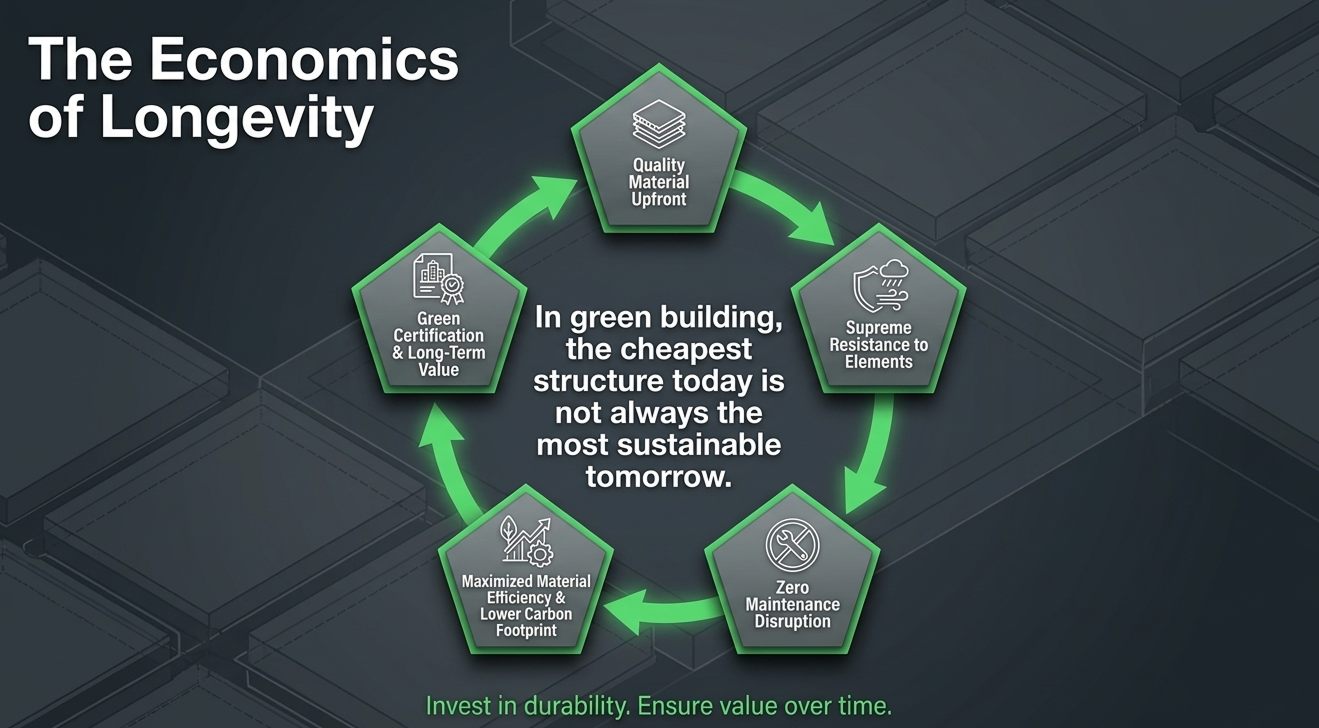
While durable concrete may require higher upfront planning or material quality, it delivers significant long-term benefits:
- Lower lifecycle cost
- Fewer disruptions from repairs
- Improved safety and structural integrity
- Stronger environmental performance
In green building, the cheapest structure today is not always the most sustainable tomorrow. Durability ensures value over time.
Conclusion
The future of construction depends on building smarter, not just building more. Concrete durability in sustainable building plays a central role in achieving that goal. By prioritizing long-lasting materials and design practices, developers can significantly reduce environmental impact while improving performance and cost efficiency.
Durable concrete is not just a technical requirement—it is a foundation for truly sustainable and green construction.
