
Water damage is one of the biggest threats to any concrete structure. Whether it’s a residential building, commercial property, basement, or water tank, moisture intrusion can lead to cracks, corrosion, mold growth, and costly repairs. That’s why waterproofing during concrete construction is one of the smartest investments developers, contractors, and property owners can make.
Instead of waiting for leaks or deterioration to appear, integrating waterproofing solutions directly into the concrete during construction offers long-term protection from the very beginning.
What Is Waterproofing During Concrete Construction?

Waterproofing during concrete construction involves adding protective systems while the concrete is being mixed, poured, and cured. This proactive approach strengthens the concrete itself by reducing permeability and preventing water penetration from inside the structure.
Unlike traditional surface-applied membranes or coatings, this method creates built-in protection that becomes part of the concrete matrix.
Common methods include:
- Crystalline waterproofing admixtures
- Integral waterproofing systems
- Water-resistant additives
- Joint sealing systems
Why Waterproofing During Concrete Construction Matters
Starting waterproofing early provides multiple benefits that post-construction solutions often cannot match.
1. Prevents Water Penetration from Day One
Concrete is naturally porous. Without proper waterproofing, water can seep through tiny capillaries and cracks, causing damage over time.
By waterproofing during concrete construction, structures gain immediate resistance to:
- Groundwater pressure
- Rainwater infiltration
- Chemical attacks
- Moisture migration
2. Reduces Long-Term Repair Costs
Reactive waterproofing can be expensive. Once leaks appear, repairs may involve:
- Surface coatings
- Crack injections
- Excavation
- Structural rehabilitation
These repairs often disrupt operations and cost significantly more than preventive waterproofing measures installed during initial construction.
3. Extends Structural Lifespan
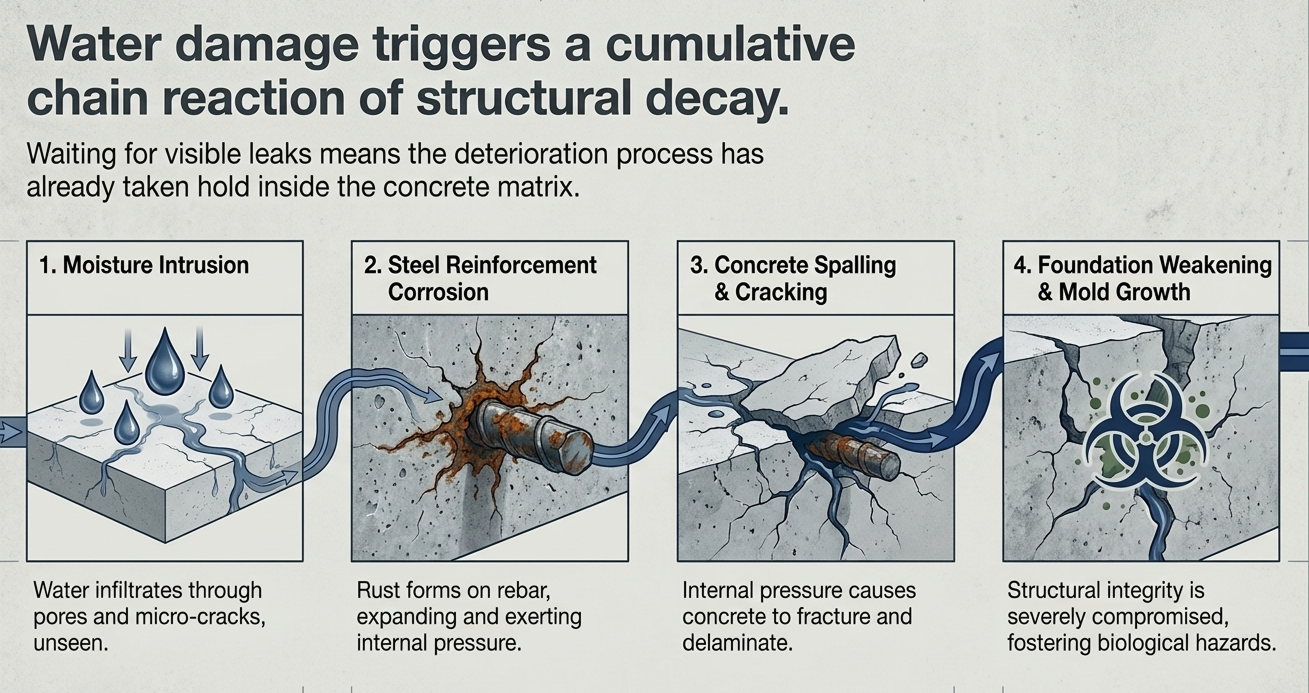
Water intrusion accelerates:
- Steel reinforcement corrosion
- Concrete spalling
- Mold and mildew growth
- Foundation weakening
With built-in waterproofing protection, the structure remains durable for decades with reduced maintenance.
Waterproofing During Concrete Construction vs. Traditional Waterproofing
| Feature | During Construction | After Construction |
| Protection Level | Integral and permanent | Surface-level |
| Cost Efficiency | Lower long-term cost | Higher repair cost |
| Durability | Long-lasting | May require reapplication |
| Maintenance | Minimal | Frequent |
| Leak Prevention | Preventive | Reactive |
Best Applications for Early Concrete Waterproofing
Waterproofing during concrete construction is highly effective for:
- Basements
- Foundations
- Roof decks
- Water tanks
- Tunnels
- Parking structures
- Elevator pits
- Retaining walls
These areas are particularly vulnerable to moisture exposure and benefit most from integral protection.
The Business Advantage of Waterproofing During Concrete Construction
For developers and contractors, early waterproofing means:
- Higher project quality
- Reduced warranty claims
- Improved client satisfaction
- Better sustainability
- Stronger reputation
By specifying waterproofing solutions at the construction stage, companies can deliver better-performing structures while protecting their bottom line.
Choosing the Right Waterproofing System
Not all waterproofing methods are equal. Selecting the right system depends on:
- Soil conditions
- Water table levels
- Structural design
- Environmental exposure
- Project budget
Crystalline waterproofing systems, such as integral admixtures, are increasingly preferred because they create self-sealing properties within the concrete itself.
Final Thoughts on Waterproofing During Concrete Construction
Waiting until leaks appear is no longer the best strategy. Modern building standards demand proactive protection, and waterproofing during concrete construction offers superior defense against water damage before it starts.
By investing in waterproofing early, builders and property owners can:
- Save money
- Increase durability
- Protect structural integrity
- Minimize maintenance
- Improve overall building performance
For any serious construction project, waterproofing should begin at the concrete stage—not after problems arise.
Protect Your Project from the Start
If you’re planning a new build, foundation, or major infrastructure project, prioritizing waterproofing during concrete construction can save significant time, money, and future complications.
Building stronger starts with building smarter.

