
Metro Manila is a rapidly growing urban hub, where high-rise developments continue to define the skyline. From residential condominiums to commercial towers, these structures face a constant challenge: water intrusion and long-term durability in a tropical, high-moisture environment.
Heavy rainfall, high humidity, and rising groundwater levels make waterproofing not just a design consideration—but a structural necessity.
This is where integral concrete waterproofing becomes a critical solution for modern high-rise construction.
Why Protecting High-Rise Developments in Metro Manila with Integral Concrete Waterproofing Matters
In dense urban environments like Metro Manila, buildings are exposed to extreme environmental stress. Without proper waterproofing, concrete structures are vulnerable to:
- Water seepage through cracks and joints
- Reinforcement steel corrosion
- Mold and mildew growth in basements and parking levels
- Reduced structural lifespan
- Costly long-term repairs and maintenance
Unlike surface-applied membranes, integral waterproofing is mixed directly into the concrete, making the structure itself resistant to water penetration from within.
How Integral Concrete Waterproofing Works in High-Rise Construction
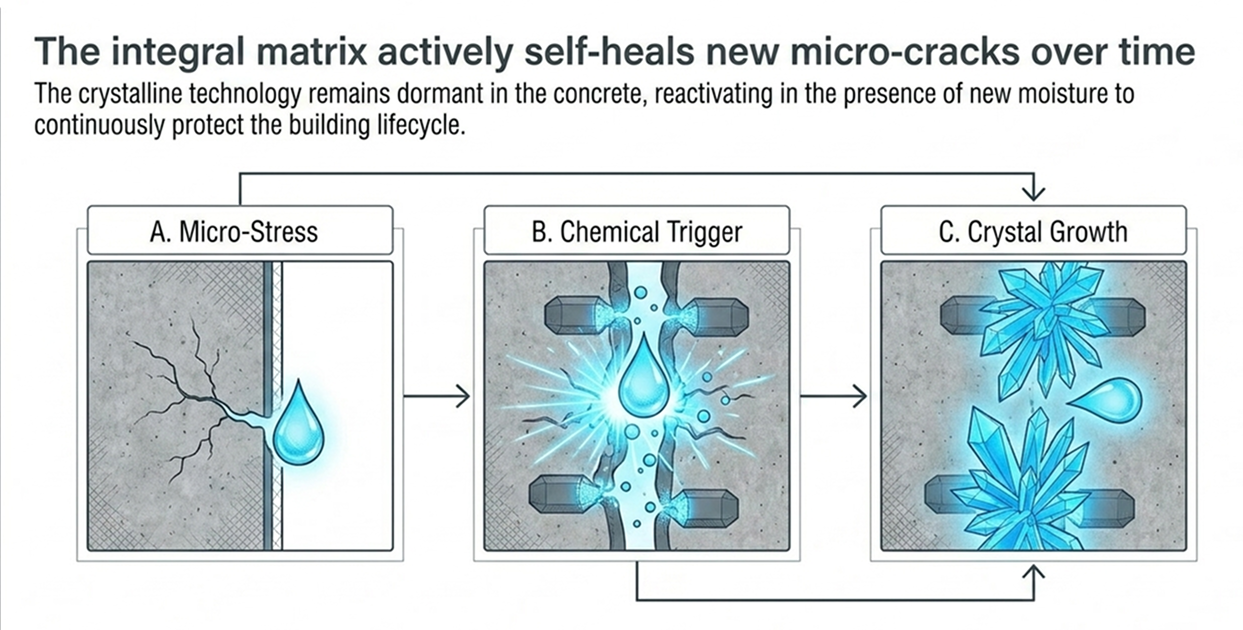
Integral waterproofing systems chemically react within the concrete matrix. Once added to the concrete mix, they form non-soluble crystalline structures that block capillaries and micro-cracks.
This process transforms ordinary concrete into a self-sealing barrier against water.
Key advantages include:
- Permanent waterproofing (not surface-dependent)
- Self-healing of micro-cracks over time
- Protection even under hydrostatic pressure
- Reduced maintenance costs over the building lifecycle
For high-rise developments in Metro Manila, this means stronger basements, podiums, cores, and water-retaining structures.

Key Areas That Benefit from Integral Concrete Waterproofing in High-Rise Buildings
1. Basements and Underground Parking
These areas are constantly exposed to groundwater pressure. Integral waterproofing helps prevent seepage and flooding issues common in Metro Manila developments.
2. Foundation Slabs and Retaining Walls
These structural elements form the backbone of any high-rise. Waterproofing ensures long-term stability and corrosion protection.
3. Elevator Pits and Service Shafts
Often overlooked, these areas are highly prone to water accumulation and require reliable protection.
4. Water Tanks and Utility Structures
Integral systems ensure potable water safety and prevent contamination risks.
Benefits of Protecting High-Rise Developments in Metro Manila with Integral Concrete Waterproofing
Choosing integral waterproofing delivers long-term value for developers, engineers, and building owners:
- Extended structural lifespan
- Lower lifecycle maintenance costs
- Improved tenant satisfaction and building reputation
- Reduced risk of structural failure due to corrosion
- Better resilience against extreme weather conditions
In a competitive real estate market like Metro Manila, durability directly impacts property value.
Integral Waterproofing vs Traditional Membrane Systems
Traditional waterproofing membranes rely on surface application, which can fail due to:
- Poor installation workmanship
- Punctures during construction
- Aging and degradation over time
In contrast, integral waterproofing is embedded into the concrete itself, meaning it cannot be damaged or removed from the surface.
This makes it particularly suitable for large-scale high-rise developments where long-term reliability is critical.
Building Smarter in Metro Manila’s Urban Environment
As Metro Manila continues to expand vertically, construction standards must evolve. High-rise developments require solutions that match their complexity and environmental exposure.
Integral concrete waterproofing is not just a protective measure—it is a strategic investment in building longevity, safety, and sustainability.

Conclusion
Protecting high-rise developments in Metro Manila with integral concrete waterproofing ensures that structures are built to last in one of the most demanding environments in Southeast Asia. By integrating waterproofing directly into the concrete, developers achieve a more durable, cost-efficient, and resilient building system from the ground up.
In a city where vertical growth is the future, waterproofing should start at the core—not the surface.
